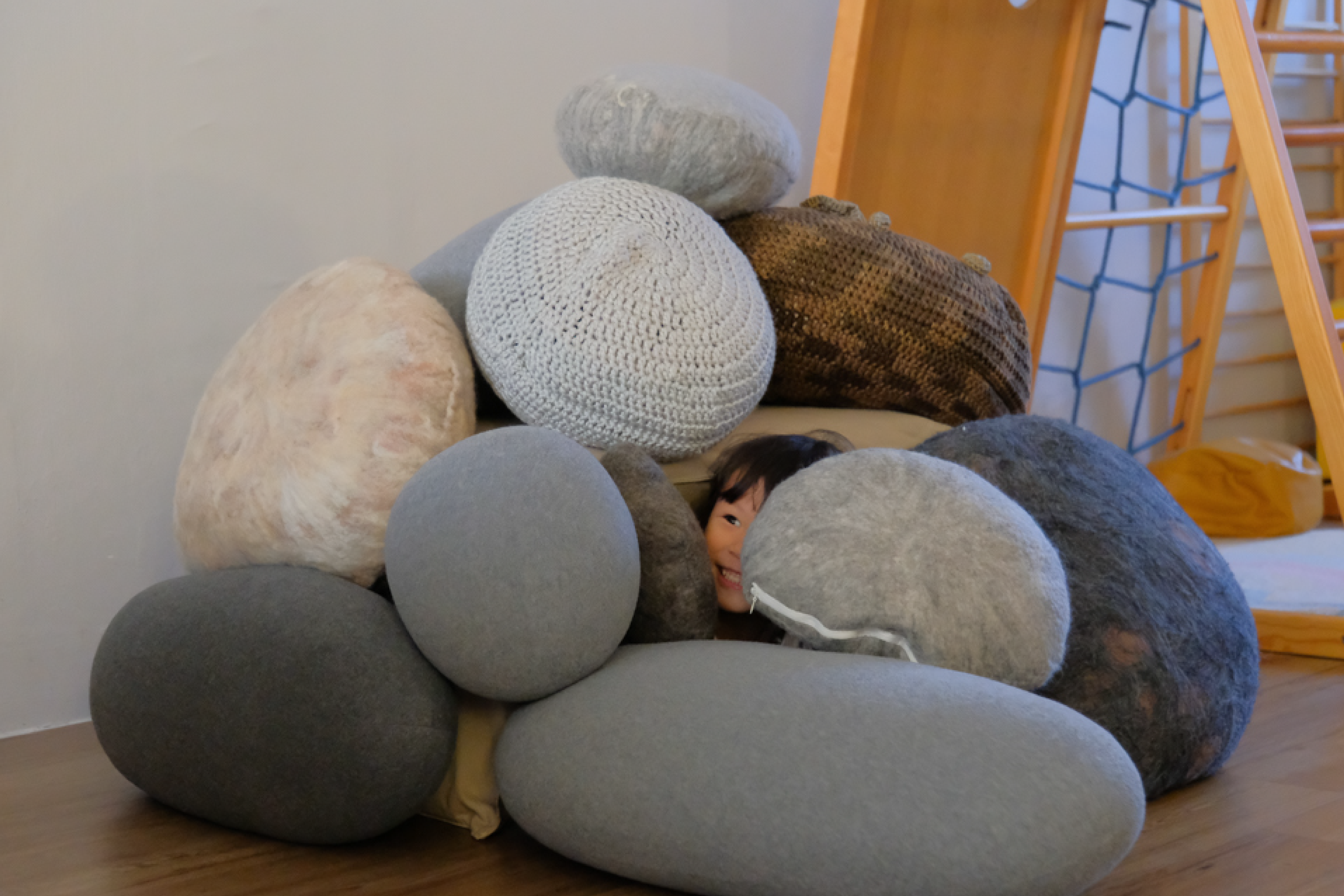
Pebble Fort is a children’s playspace that reimagines fort-building through soft, interactive technology. Rooted in the childhood act of creating forts, it invites children to explore, build, and connect within a tactile landscape where touch brings the environment to life. The space offers comfort and security while leaving room for imagination to unfold freely through play.
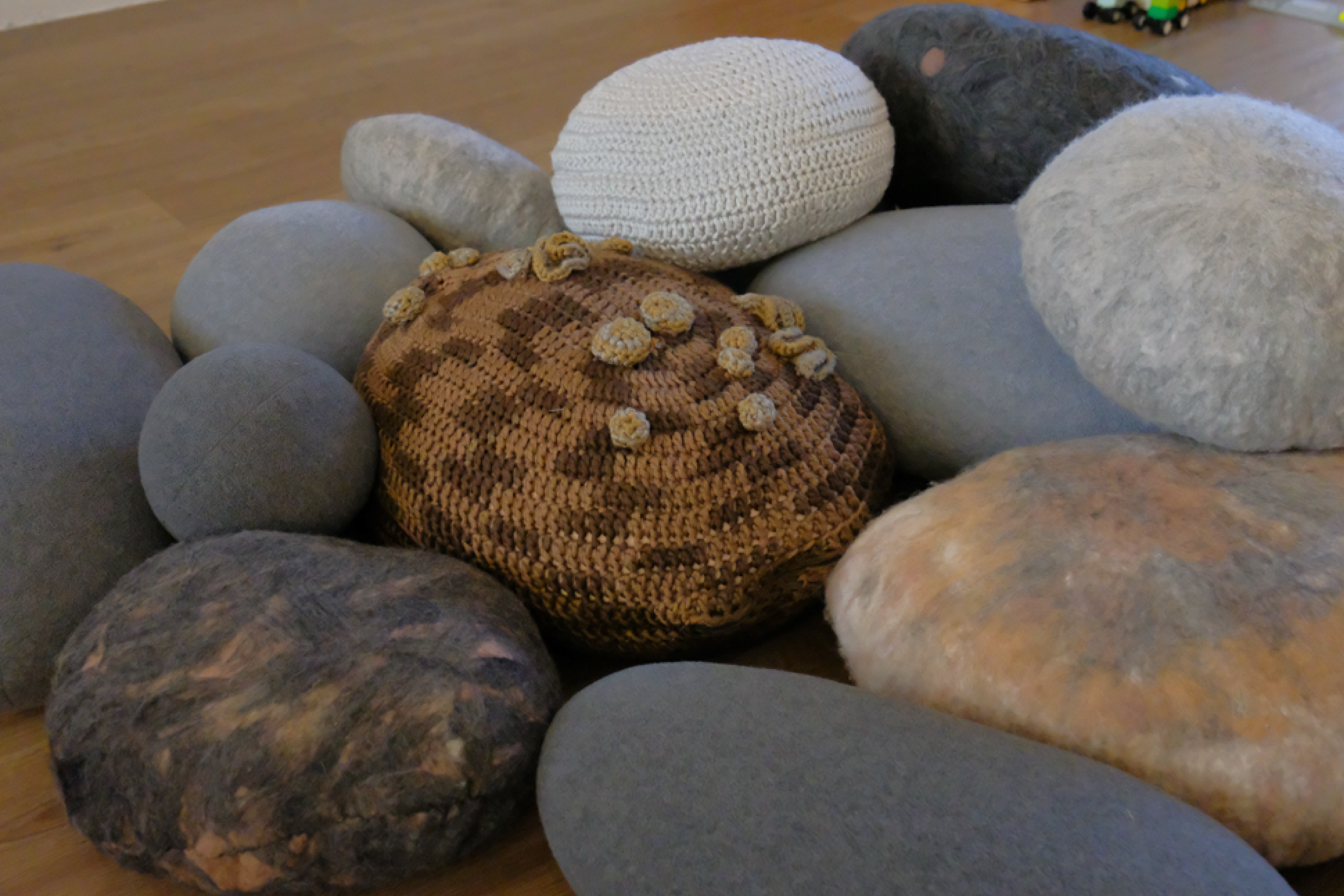
Drawing from the calm of nature, the pebbles echo the smooth, rounded forms of stones and the meditative act of stacking them. Each pebble feels grounding yet playful, encouraging children to gather, rearrange, climb over, or crawl into soft forms to shape evolving landscapes. Together, they create an environment that nurtures imagination while supporting emotional calm.
Touch as an Interface
Interaction is driven by tactile exploration. Rubbing, pinching, and pressing each pebble triggers subtle electronic responses that deepen sensory discovery. Calming light and ambient sound create an immersive atmosphere, while pneumatics and gentle kinetic movement give the space a “living” quality that responds to play.
Working with Soft Materials
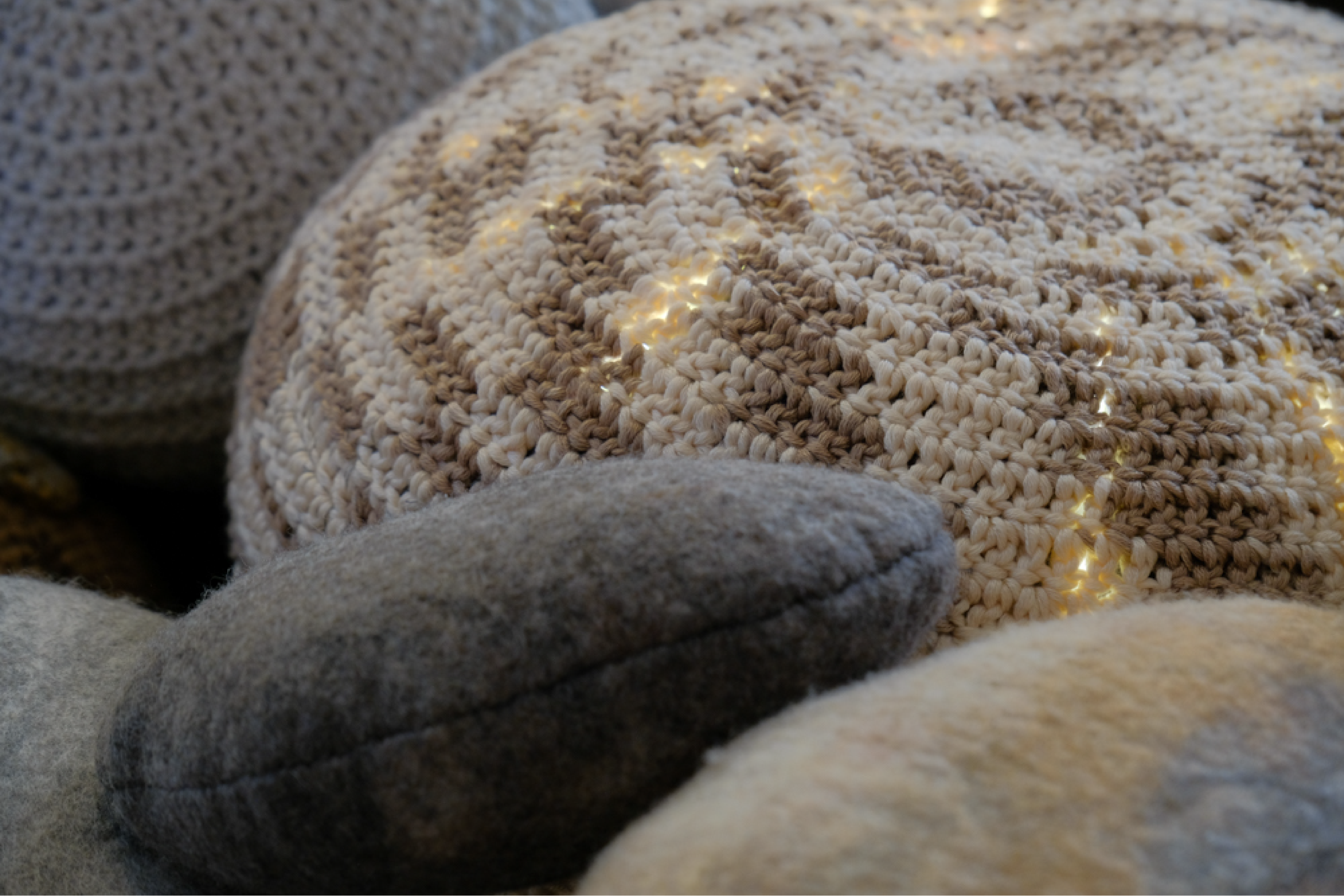
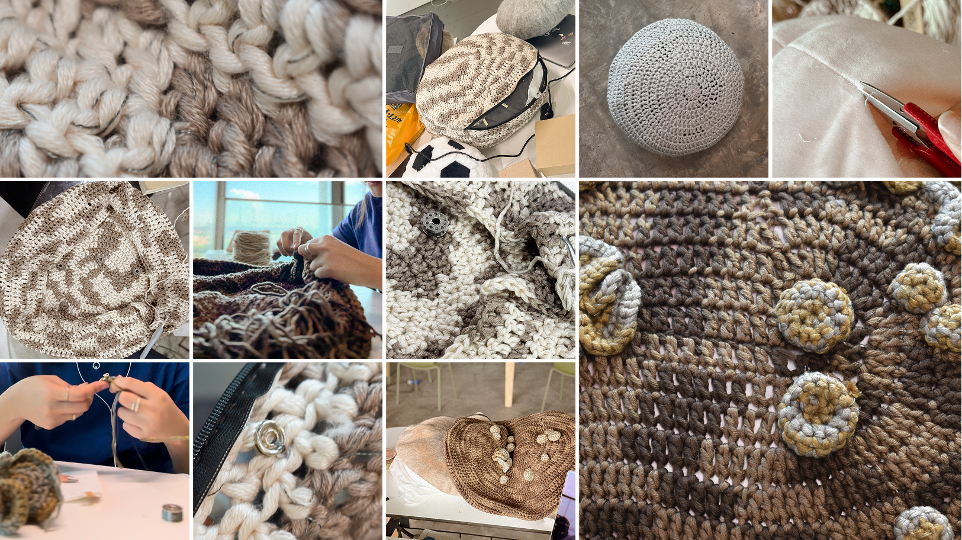
Material exploration focused on embedding interaction directly into soft textiles. Conductive thread was intertwined with regular yarn and crocheted as part of the surface, allowing electrical pathways to be seamlessly integrated without compromising softness or flexibility. The open, looped structure of crochet also enabled precise control over the conductive layout, ensuring consistent and visible connections while maintaining a clean, tactile finish.
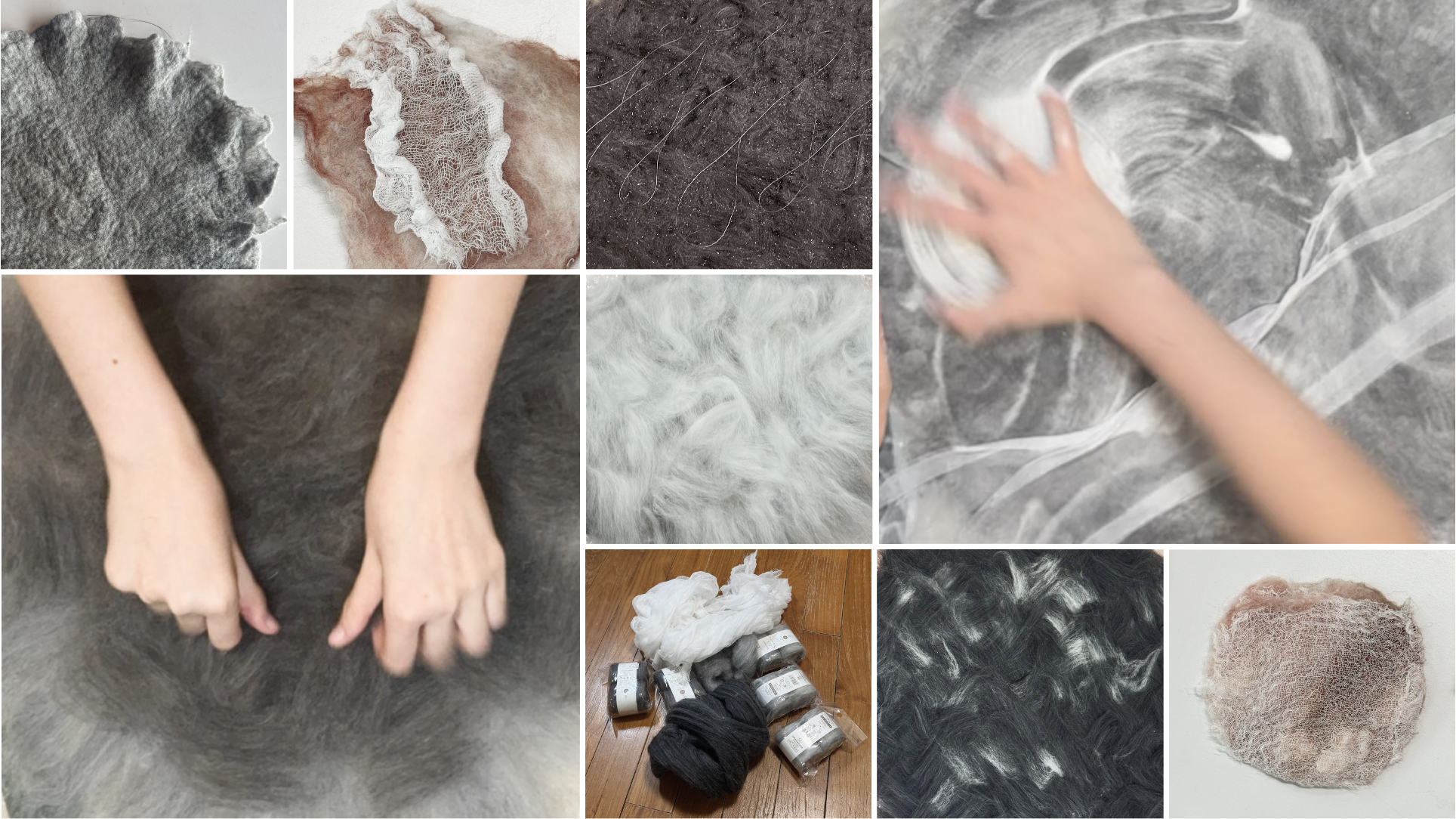
For wet felting, conductive thread was layered between felt fibres and extended beyond the circumference of the net base, allowing it to be sewn into the edge and connected to a snap button. This created a conductive fabric across the base, with the thread hidden from plain sight. Concealing conductive pathways between felt layers resulted in a seamless, touch-responsive surface, making interactions feel subtle and almost magical.
Building the System
Electronic development began once the pillow fort concept was defined, guided by how children naturally interact with pillows — through hugging, grasping, and pressing. These gestures informed the interaction system, shaping how each pebble would sense and respond to touch.
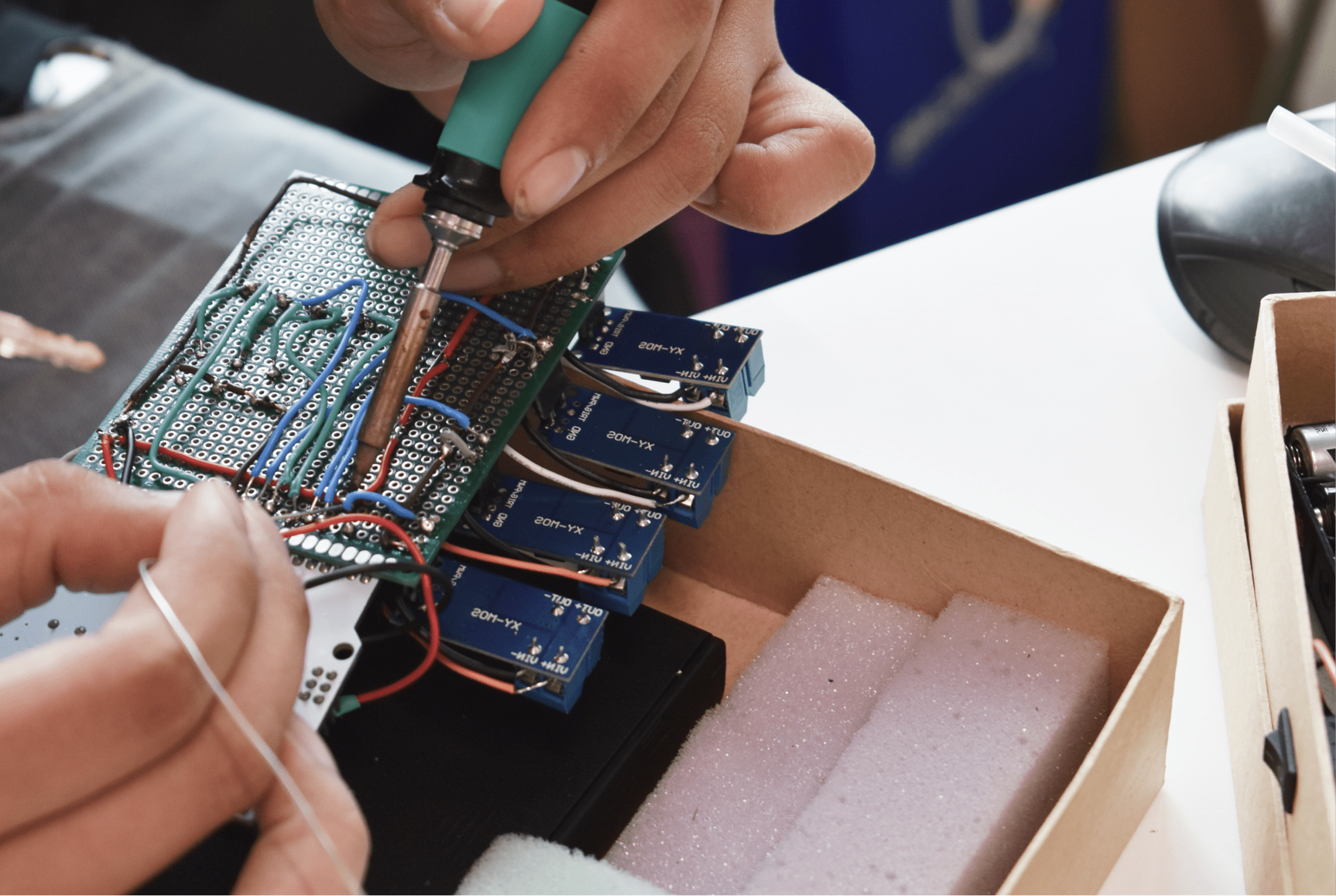
Capacitive touch sensing was chosen for its seamless integration without visible moving parts, supporting a soft and unobtrusive interface. To ensure reliability and durability in a play environment, the final system was built on a printed circuit board (PCB), allowing the interactions to remain consistent and robust while staying hidden within the soft forms.
Technology, Out of Sight
Technology is integrated directly into the textiles, remaining unobtrusive and quietly supportive. Conductive threads, sensors, and electronics are concealed within the soft forms, allowing each pebble to feel familiar, inviting, and grounded in touch. By keeping technology out of sight, Pebble Fort shifts focus back to play, creating space for imagination, exploration and moments of calm to emerge naturally through interaction.
Credits Models: Jordan Chan, Laurel Chan Images by: Ryka Nouvin, Bobby Lui, Seidl Kim