the OP-1 field experience
2025
National University of Singapore,
Division of Industrial Design
Guided by Sixiu Tan
Spatalising Emotion in Retail Platform
— Design Futures & Critical Inquiry
— Social & Service Transformation
In collaboration with Kim Seidl & Jueun Kim

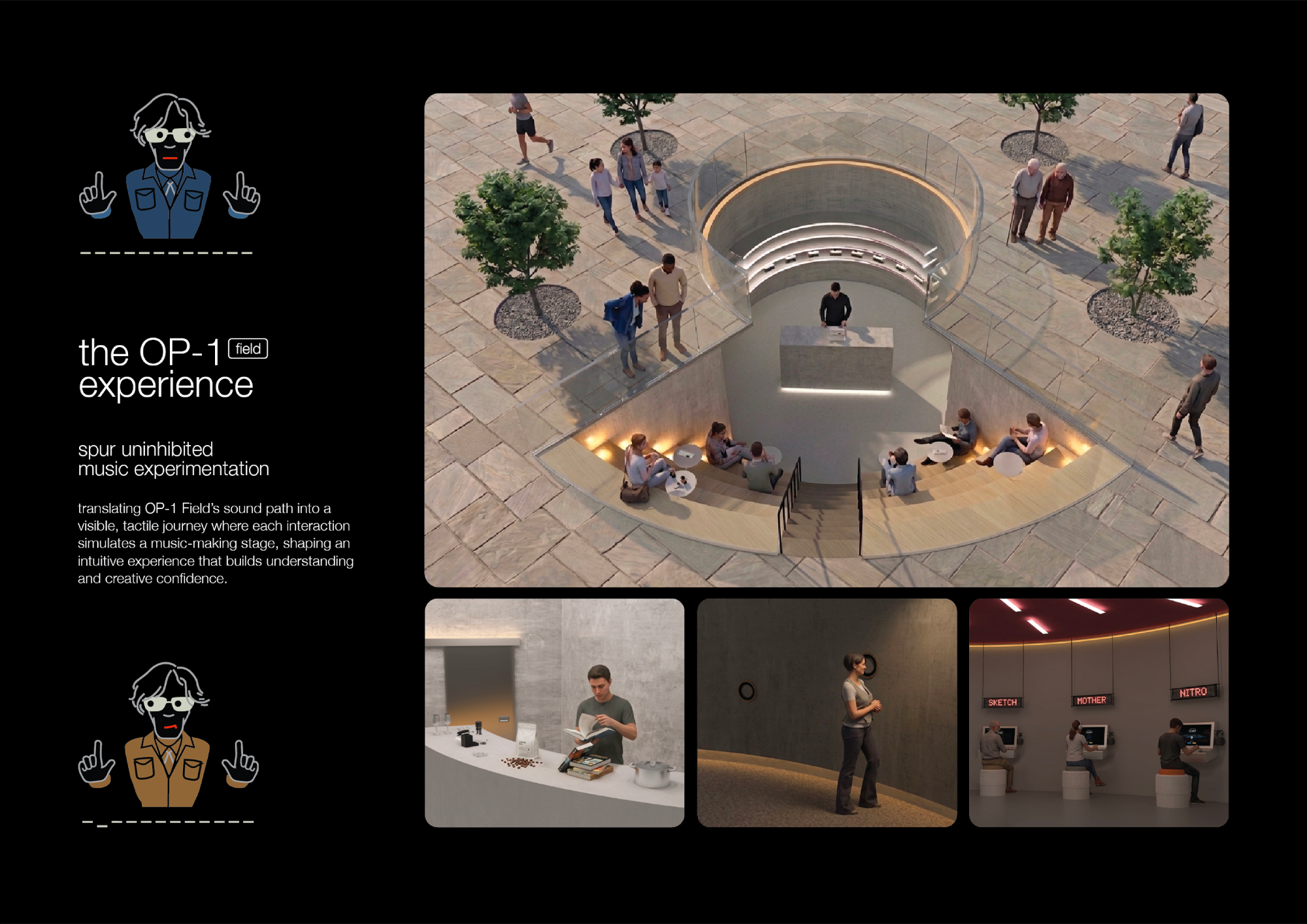
The OP-1 field experience is designed to inspire uninhibited exploration, where sound is discovered rather than taught. Found objects become instruments, arcade stations translate play into composition, and communal zones invite exchange. Each moment is open-ended, tactile, and intuitive, to encourage curiosity and expression through a journey of making freely.

Making sense of the unfamiliar

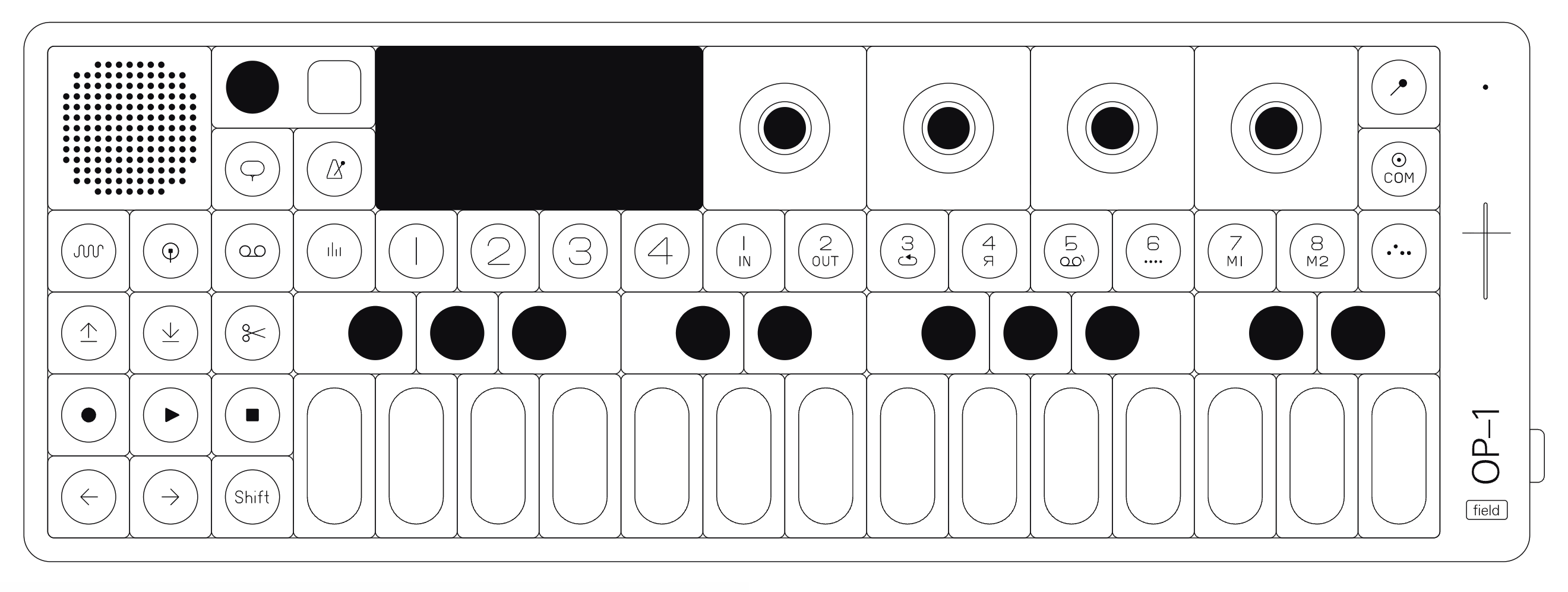
The OP-1 Field isn’t an immediately intuitive product. It’s compact, expressive, and powerful, but often confusing to those encountering it for the first time. Even experienced users spend time experimenting before they feel comfortable enough to create with it. We chose it precisely because of this friction. What would it mean to translate something inherently complex into a space that feels graspable? How might an environment help someone understand by doing, rather than by instruction? This project began as an attempt to demystify (rather than simplify) the OP-1 Field.

Designing for emotion

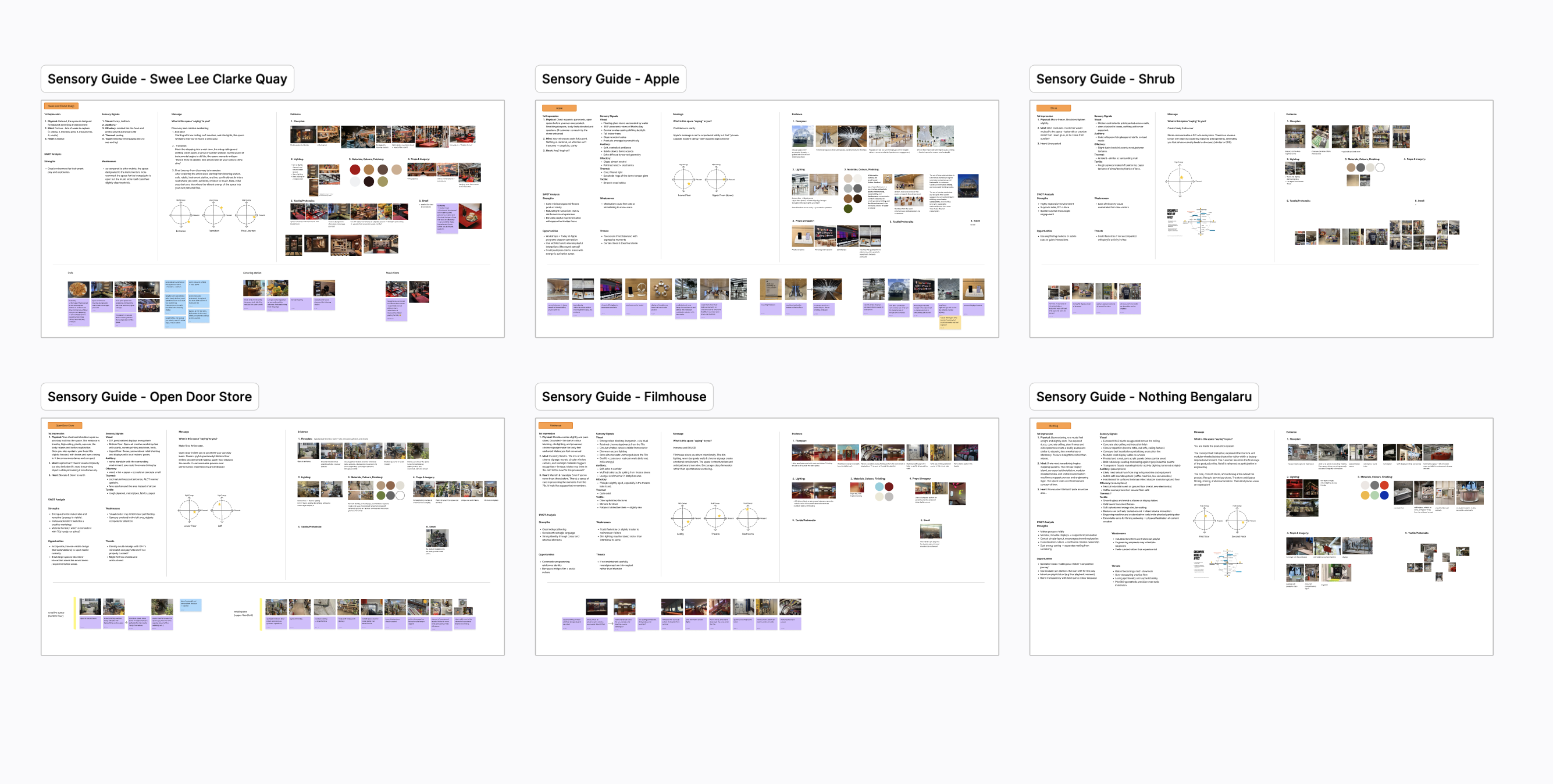
Grounded in the philosophy of Kansei, we approached the project through emotion rather than function.If Chisei is about logic, Kansei is about how meaning is experienced through form, atmosphere, and subtle cues. It acknowledges that understanding doesn’t always begin with clarity. It could begin with curiosity and even slight confusion. We studied how different environments shape perception. By visiting spaces across retail and exhibition contexts, we mapped how sound, light, material, and interaction influence behavior and emotion. Some spaces invited play. Others created tension or intrigue. Each revealed how meaning is constructed through the senses. In parallel, we analysed the OP-1 Field itself. Its form language, interface, and interaction logic. What makes it distinct isn’t just what it does, but how it guides users through making.

This led us to a key insight which became the conceptual backbone of the project:

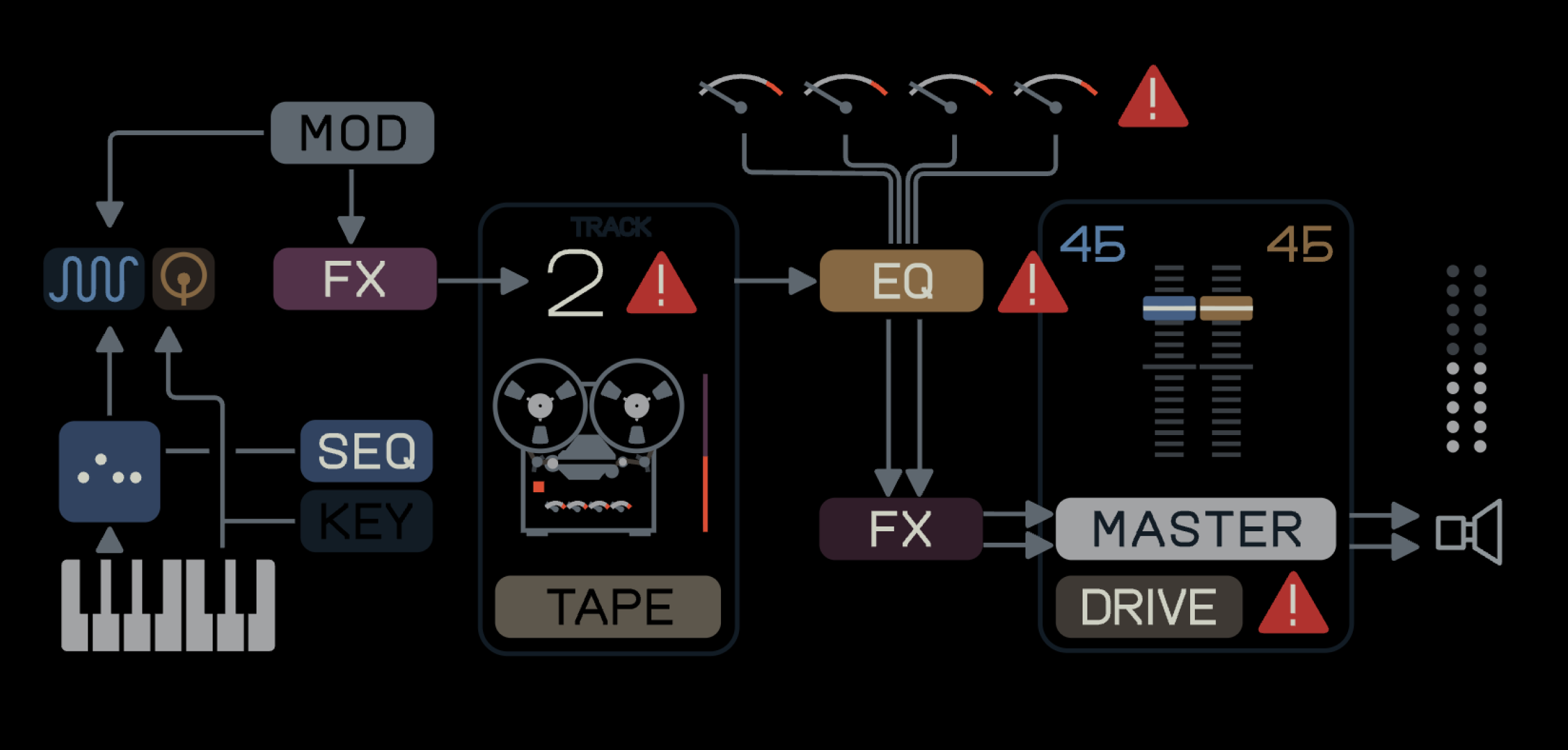
The OP-1 Field is structured around a sound path.

A flow from
recording → layering → manipulating → composing.

Turning sound into space

The spatial experience translates the OP-1 Field’s sound path into a sequence of rooms, each representing a stage in the music-making process.

Found Sound Rooms
Users begin by interacting with everyday objects through tapping, shaking, scraping etc. Users are encouraged to listen closely and uncover the musical potential in each material as each object produces its own unique sonic character.

In the next ambient room,  subtle, layered sounds are embedded at different heights within the walls, encouraging attentive listening. Together, these spaces slow users down, reframing sound as something to be explored rather than produced.

Effects Room
Here, users shape what they’ve recorded. Interactive consoles simulate OP-1 Field effects, supported by visual guides that break down each parameter step-by-step. Abstract audio processes are made visible and legible. What was once opaque becomes intuitive through interaction.

Communal Listening Space
At the centre, a sunken communal area acts as both threshold and gathering point. Sound spills outward into the surrounding environment, drawing people in. Visitors can sit, listen, and experiment with the OP-1 Field itself, bridging the gap between observation and participation.

From curiosity to confidence

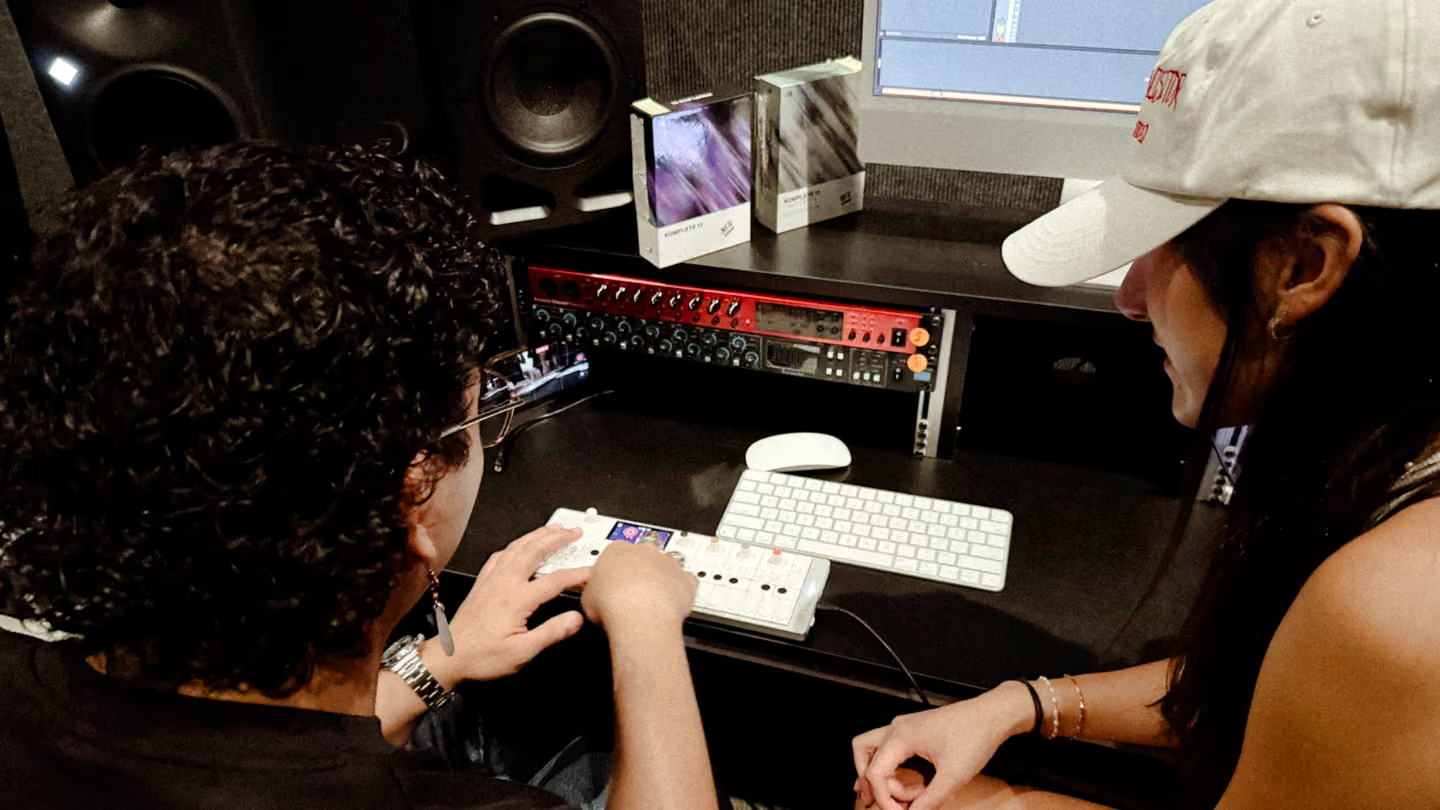
For the final showcase of the project, we collaborated with electronic musician Genesis Keefer, who produced a track entirely on the OP-1 Field. This track was played within the communal space, grounding the experience in a real creative outcome.

Listen to  OP-1 field demo track
button arrow

We also developed a series of supporting elements to extend the experience. This included animated visualisations of effects, such as the “Mother” effect, which break down how sound is shaped over time, as well as recorded ambient sound layers from the space itself. Alongside these, we created interactive demonstrations that encourage more focused listening, allowing users to engage more closely with how sounds evolve and come together.

Together, these elements reinforced the core idea: understanding emerges through engagement. The experience begins with curiosity, uncertain, exploratory and slightly tentative. It ends with confidence. Not necessarily mastery, but a sense that the system is no longer intimidating.

Mother demo animation
button arrow
Listen to  ambient sounds
button arrow

Demystifying through doing

The OP-1 Field Experience reframes a complex instrument as something approachable, not by reducing its capabilities, but by translating its logic into a physical journey. By making the invisible visible, and the abstract tangible, the space invites users to move from passive observation to active creation. Because when the language of a tool becomes clear, creation stops feeling like guesswork and starts to feel intentional.